
Migrant Clinicians Network's white paper, “Failures of US Health Care System for Pregnant Asylum Seekers,” outlines how pregnant asylum seekers who have been released into the US to await their asylum hearing face extreme obstacles to secure prenatal care, despite their legal presence within the country.
Without prenatal care, infants will not have the benefit of early screening and treatment for potentially life-threatening diseases and screening for congenital abnormalities, while in utero. Additionally, pregnancies without prenatal care may result in excess utilization of emergency services which produces unforeseen strain on the health care system.
Knowledge of prenatal care needs, cost, lack of insurance, transportation, refusal by health centers, and fear are delineated as key barriers for pregnant asylum seekers from accessing the care they need during their pregnancy.
Press contact: Claire Hutkins Seda, cseda@migrantclinician.org.
Among the many obligations health care providers have to their patients, their families and life in general, they forget to put themselves on the priority list. This comic book dedicated to health care providers reminds them how important it is to take care of themselves to meet the needs of their patients and families. It also offers simple self-care steps to improve overall wellness.

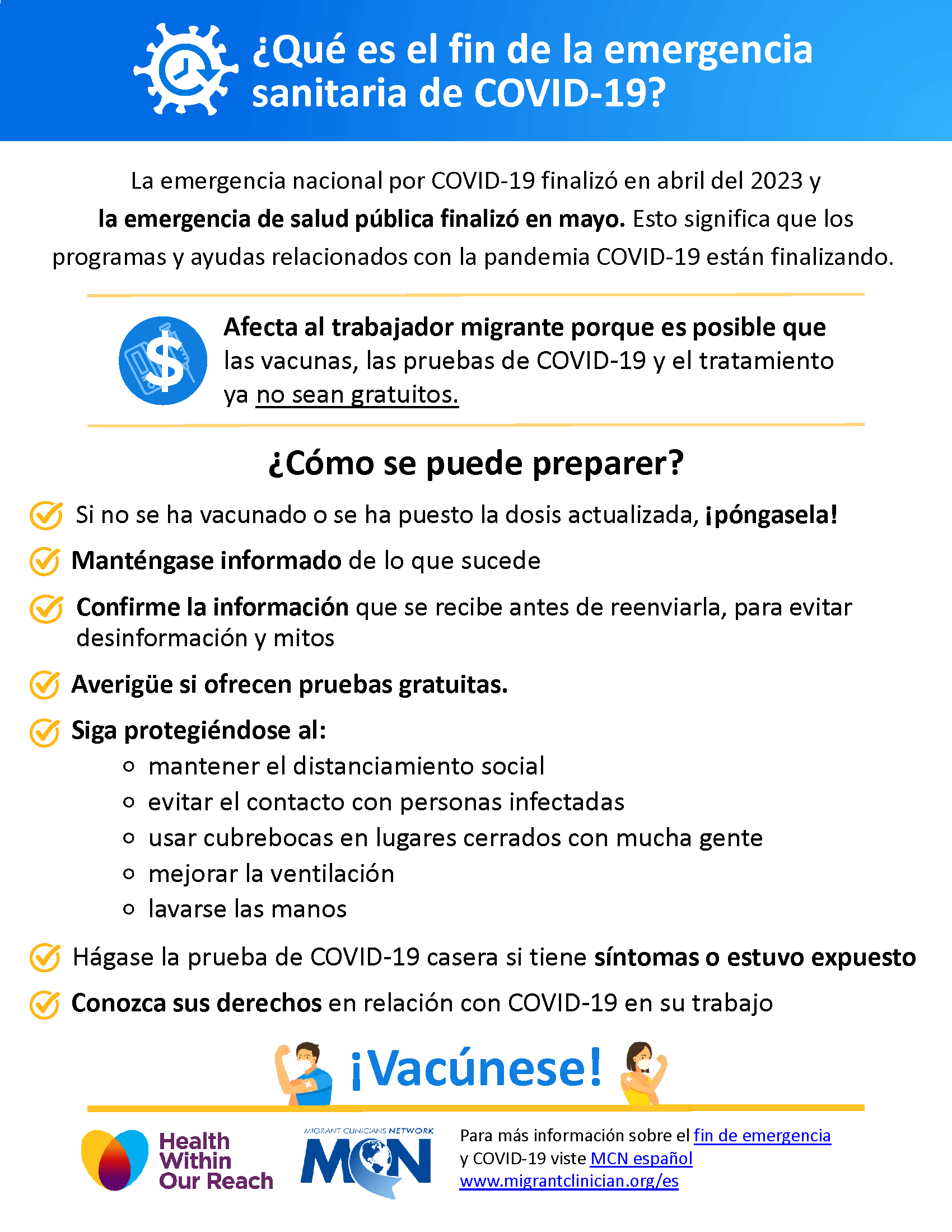
This resource provides information confirming the safety and effectiveness of the COVID-19 vaccine. It also includes recommendations for receiving the vaccine and COVID-19 prevention. This resource is available in pre-made and template format, and in three languages including English, Spanish, and Haitian Creole.
These image-centric and engaging resources can help clinicians reach refugee, immigrant, and migrant communities with important information regarding getting vaccinated. The flyers are available in English, Spanish, and Haitian Creole, and both pre-made and editable versions are available. Users can insert their organization logo as well as state-specific information such as their state vaccine sign-up website and vaccine customer service phone number. Along with these fliers, MCN has created a simple ‘how-to’ video (see above) for editing the fliers.
The original designs for this resource were created by a staff member of East Coast Migrant Head Start Project who is the daughter of a farmworker, and who had once gone to East Coast Migrant Head Start Project centers herself. The flyers were adapted by MCN.
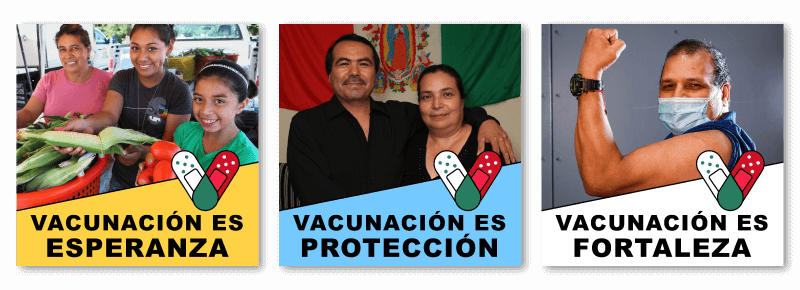
These resources include social media images that promote COVID-19 vaccination. They can be shared as social media posts or used as images on other materials. They are available in both Spanish and Haitian Creole.
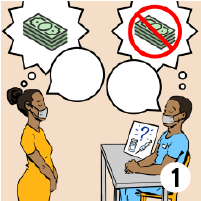
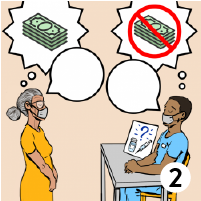
The following images can be used for social media posts or other purposes. The illustrations depict a healthcare worker and woman discussing vaccines and money. The images have empty speech bubbles that can be edited to include text.
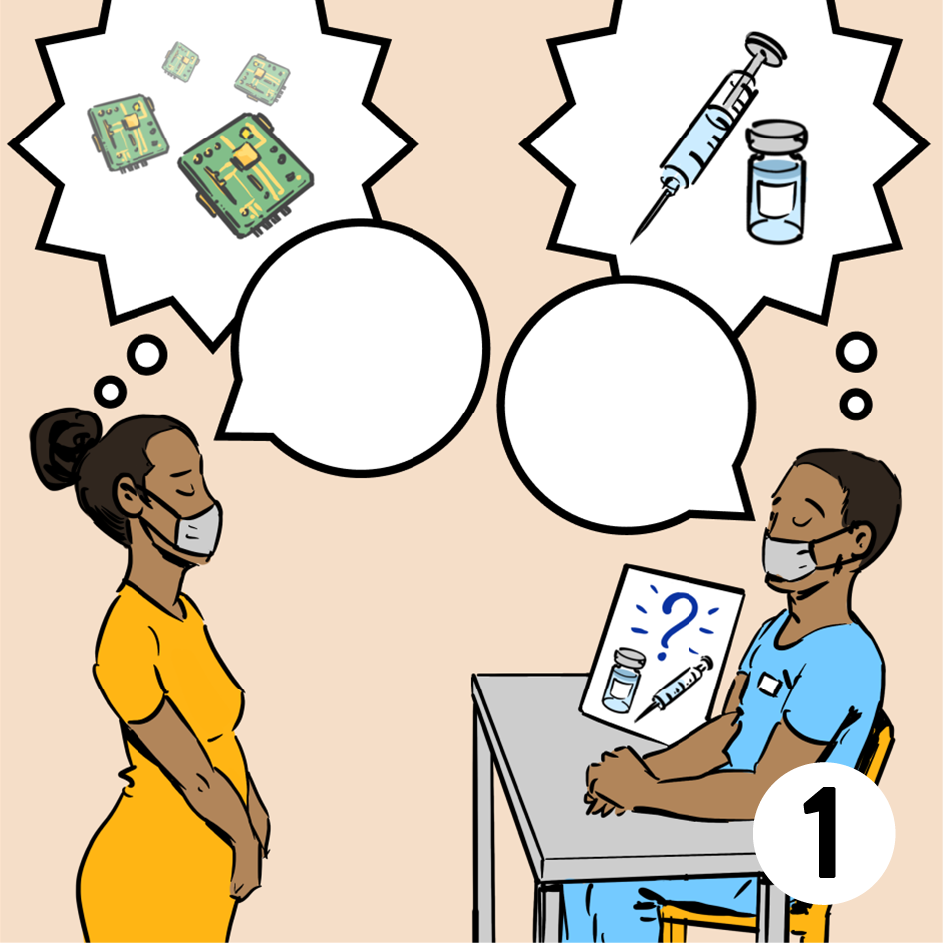
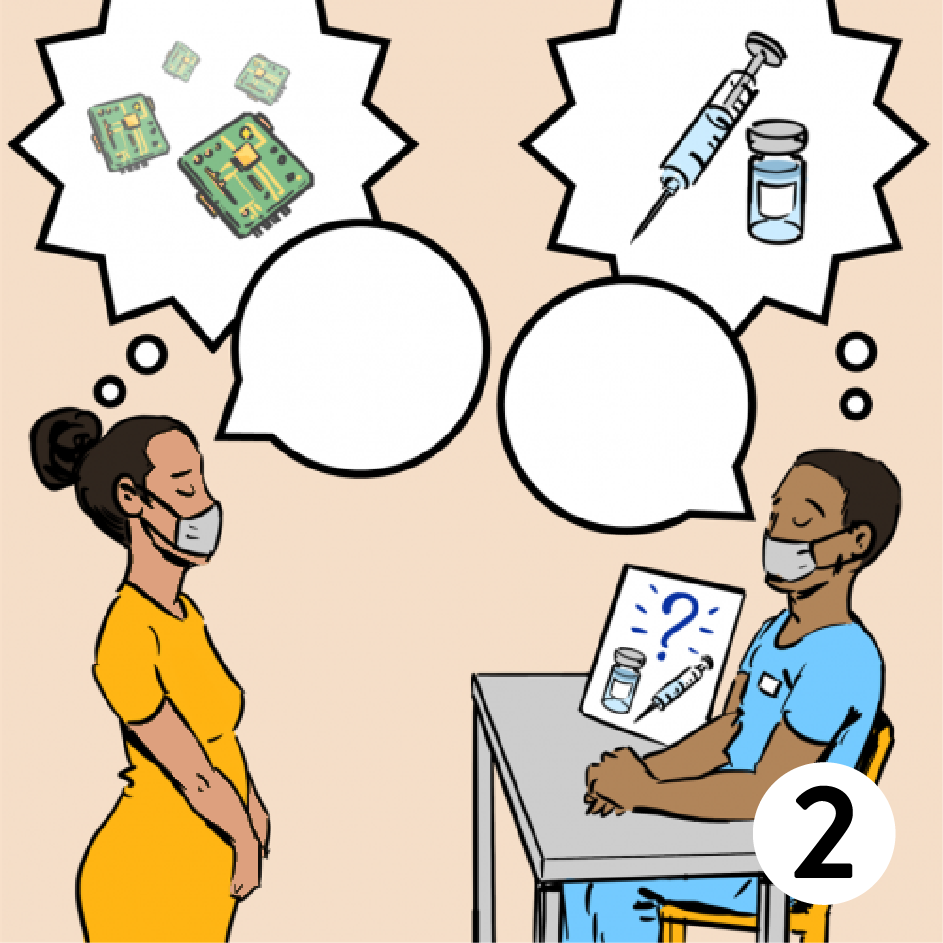
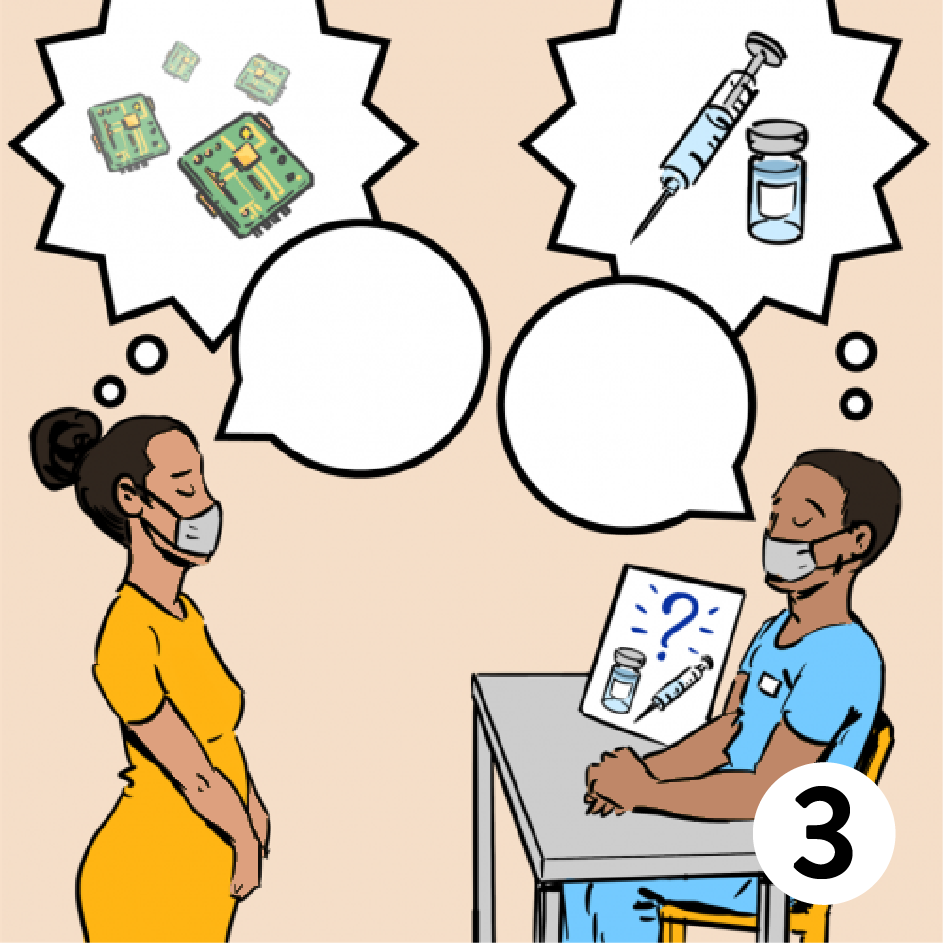
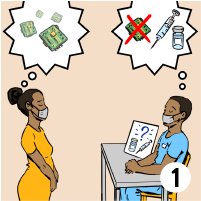
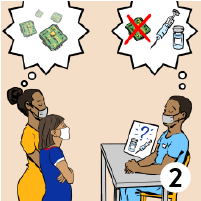
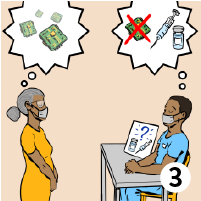
The following images can be used for social media posts or other purposes. The illustrations depict a healthcare worker and patient discussing the myth of microchips in vaccines. Some of the images include empty speech bubbles that can be edited to include text. These images can be used to help address vaccine myths regarding microchips in vaccines.
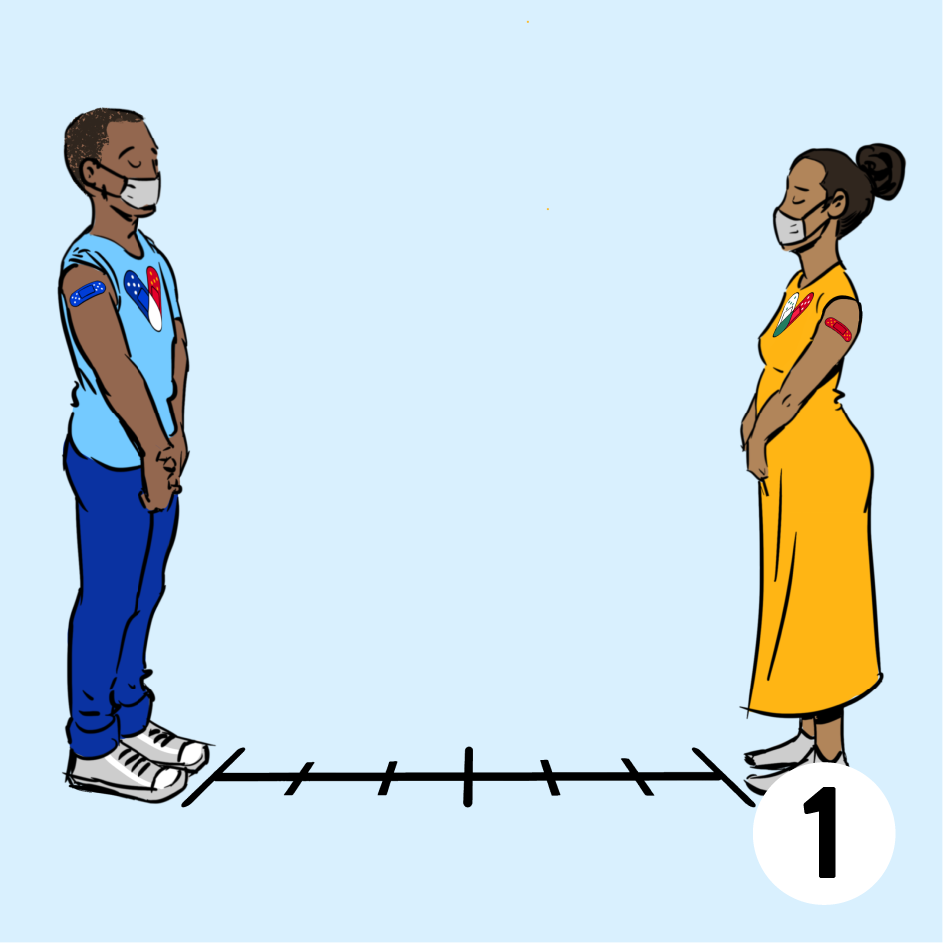
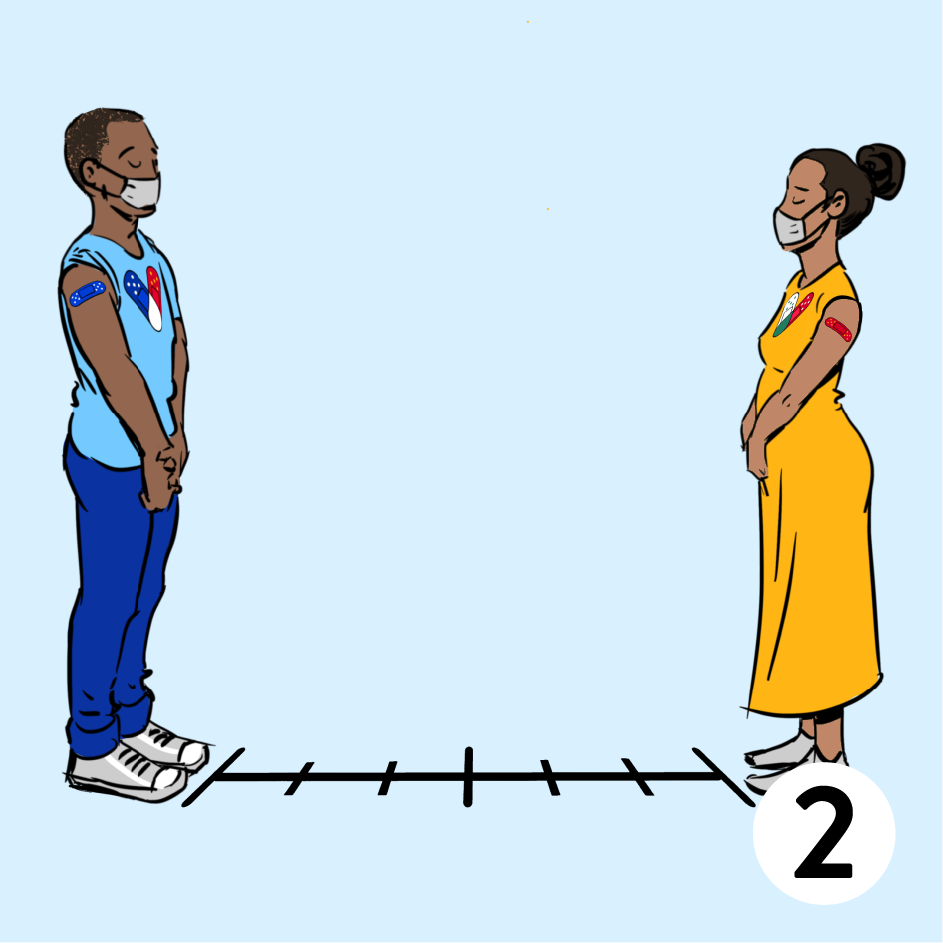
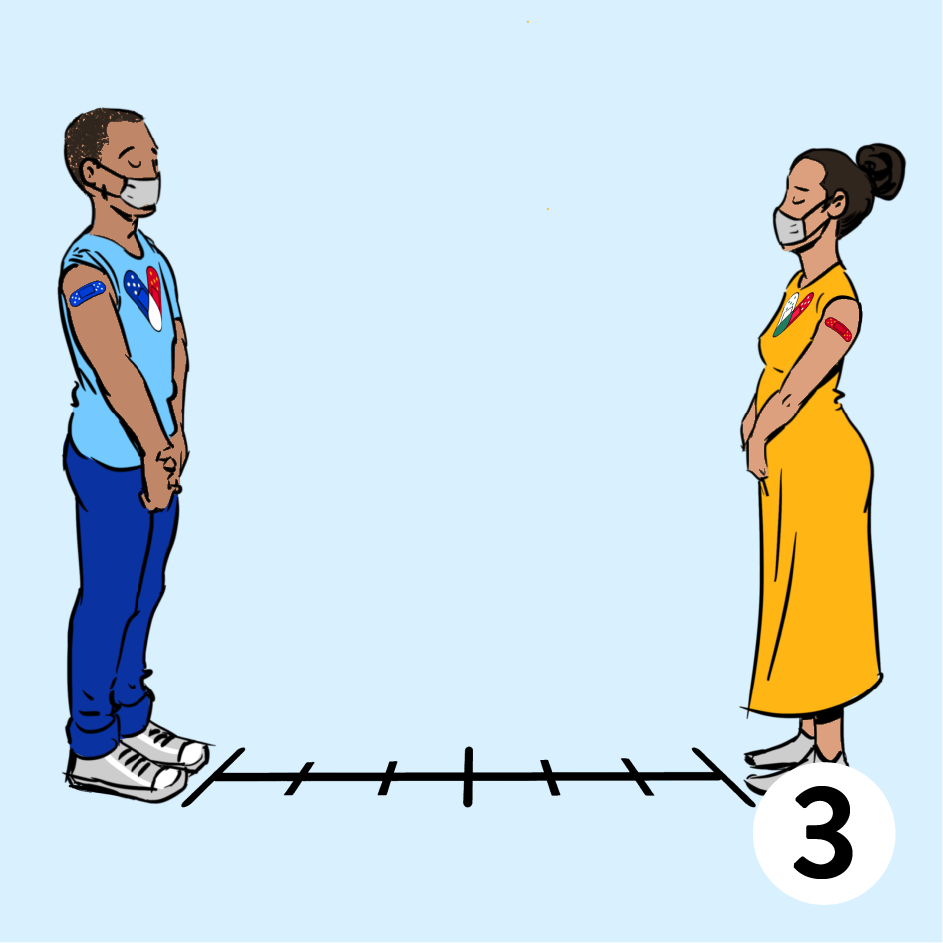
The following images can be used for social media posts or other purposes. The illustrations depict two people standing six feet apart while wearing masks. The images can be used to promote social distancing and practices to prevent the transmission of infectious diseases.
