This resource provides parents with instructions on ways you can help prevent the COVID-19 virus from transmitting to children, including information about approved vaccines for each age group. Additionally, it provides resources for more information including places you can go to get your child vaccinated. This resource is available in pre-made and template format, and in three languages including English, Spanish, and Haitian Creole.
This resource provides information regarding COVID-19 vaccination and pregnancy. It confirms that the COVID-19 vaccine is completely safe to receive before, during, and after pregnancy. Additionally, it provides resources for more information including places you can go to receive a vaccination, and overviews vaccine effectiveness and COVID-19 prevention. This resource is available in pre-made and template format, and in three languages including English, Spanish, and Haitian Creole.

This publication was supported by the Health Resources and Services Administration (HRSA) of the U.S. Department of Health and Human Services (HHS) as part of an award totaling $ 1,310,460 with 0 percentage financed with non-governmental sources. The contents are those of the author(s) and do not necessarily represent the official views of, nor an endorsement, by HRSA, HHS, or the U.S. Government. For more information, please visit HRSA.gov.
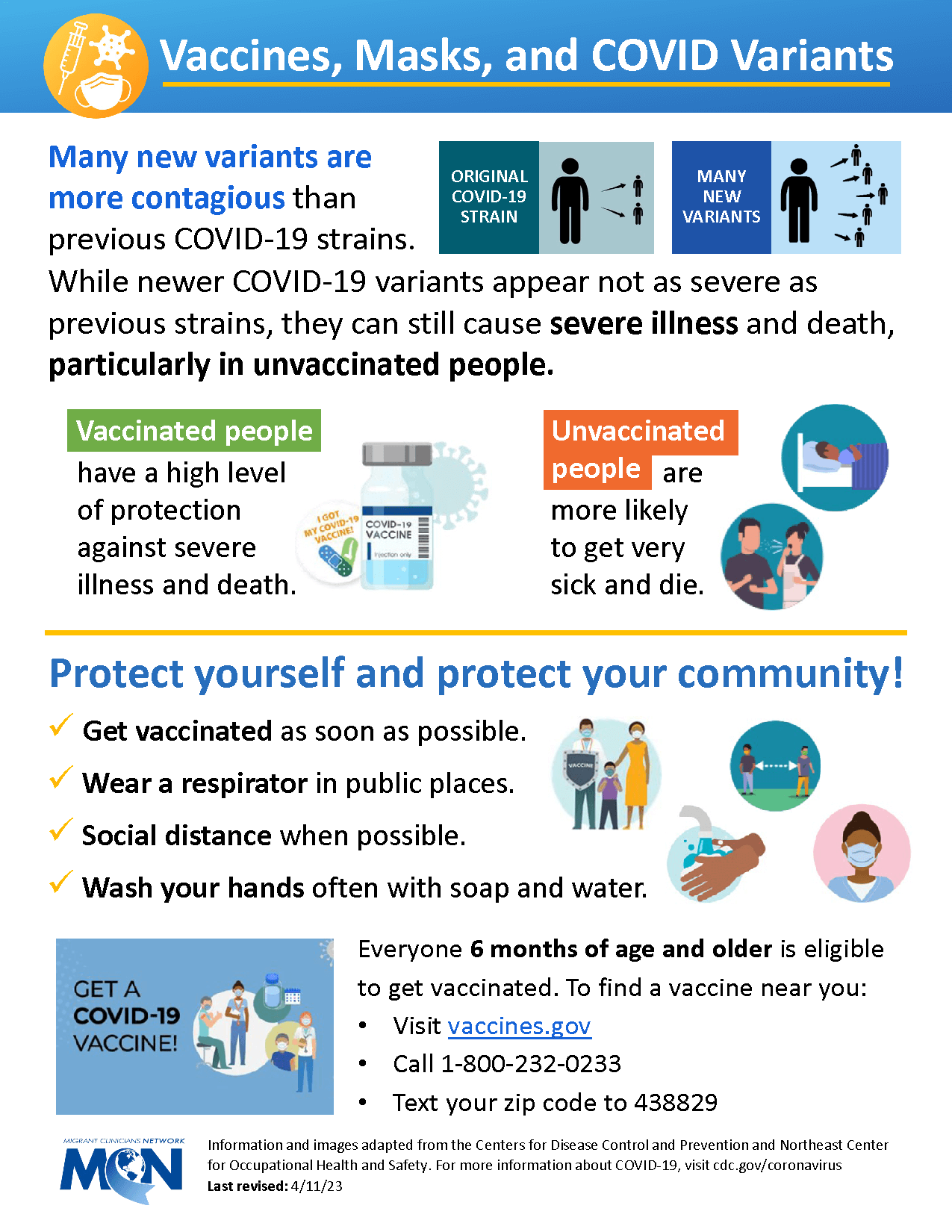
This resource provides information confirming the safety and effectiveness of the COVID-19 vaccine. It also includes recommendations for receiving the vaccine and COVID-19 prevention. This resource is available in pre-made and template format, and in three languages including English, Spanish, and Haitian Creole.

These resources feature printable stickers designed to promote vaccination. They can be printed or used as images on social media to reach audiences from different countries while encouraging vaccination. The flags-colored V-mark stickers represent the U.S., Haiti, and different countries in Latin America.
Agricultural workers are at significant risk for heat stress. Heat stress results when the body cannot get rid of excess heat and its core temperature rises. Heat stress may lead to more severe heat illness including heat exhaustion, heat cramps, heat stroke, and even death if left untreated. Agricultural work, which requires performing physically demanding work for long hours in hot and sometimes humid weather, places workers at high risk.
This guide provides information to clinicians on the prevention and treatment of heat-related illness. Since workers may not be familiar with all of the symptoms of heat stress, it is important that clinicians discuss heat illness symptoms and prevention with agricultural workers and others who are at risk.
This joint FJ and MCN publication was supported by the Health Resources and Services Administration (HRSA) of the U.S. Department of Health and Human Services (HHS) as part of awards totaling $1,949,598 with 0% financed with non-governmental sources. The contents are those of the authors and do not necessarily represent the official views of, nor an endorsement by, HRSA, HHS, or the U.S. Government. For more information, please visit HHS.gov.
These image-centric and engaging resources can help clinicians reach refugee, immigrant, and migrant communities with important information regarding getting vaccinated. The flyers are available in English, Spanish, and Haitian Creole, and both pre-made and editable versions are available. Users can insert their organization logo as well as state-specific information such as their state vaccine sign-up website and vaccine customer service phone number. Along with these fliers, MCN has created a simple ‘how-to’ video (see above) for editing the fliers.
The original designs for this resource were created by a staff member of East Coast Migrant Head Start Project who is the daughter of a farmworker, and who had once gone to East Coast Migrant Head Start Project centers herself. The flyers were adapted by MCN.