copy deeplink OSHA Flood Preparedness, Response, and Recovery
OSHA Flood Preparedness, Response, and RecoveryComprehensive flood information including links to preparedness and response/recovery pages.
copy deeplink OSHA Hurricane Preparedness, Response, and Recovery
OSHA Hurricane Preparedness, Response, and RecoveryComprehensive hurricane information including links to preparedness and response/recovery pages.
copy deeplink Hurricane Recovery Resources for Health Centers
Hurricane Recovery Resources for Health Centers"To assist health centers in obtaining Federal Emergency Management Agency (FEMA) funding for damaged or destroyed facilities, Capital Link has developed Hurricane Recovery Resources for Health Centers, supported by the Health Resources and Services Administration."
copy deeplink Clinical Guidance for Carbon Monoxide (CO) Poisoning After a Disaster
Clinical Guidance for Carbon Monoxide (CO) Poisoning After a DisasterA resource by the CDC highlighting the symptoms and signs of carbon monoxide poisoning, which is often a cause of illness and death after a natural disaster.
"Carbon monoxide (CO) is an odorless, colorless, poisonous gas that can cause sudden illness and death if present in sufficient concentration in the ambient air. When power outages occur during emergencies such as hurricanes or winter storms, the use of alternative sources of fuel or electricity for heating, cooling, or cooking can cause CO to build up in a home, garage, or camper and poison the people and animals inside." - CDC
copy deeplink List of Registered Pesticide Medical Supervisors in California
List of Registered Pesticide Medical Supervisors in CaliforniaCalifornia's Medical Supervision Program is a biomonitoring program that measures cholinesterase activity in bloog samples from agricultural workers. Employers are required by law to contract with physicians who have registered for this program, all of whom are included in this list.
"Coccidioidomycosis or Valley Fever is an infectious disease in parts of the U.S.A. It is caused by inhaling microscopic arthroconidia (also known as arthrospores or spores) of the closely related fungal species Coccidioides immitis and C. posadasii. Areas where Coccidioides is endemic (native and common) include states in the southwestern U.S.A. such as Arizona, California, New Mexico, Nevada, Texas, and Utah and parts of Mexico, Central America and South America."
copy deeplink Nail Salon Worker Safety and Health - Best Practices and Training Guide
Nail Salon Worker Safety and Health - Best Practices and Training Guide
Safety and Health Practicesfor Nail Salon Workers and a Training Guide for Nail Salon Worker Safety and Health Outreach Program
- Best_Practices_HOPE.pdf (230 KB)
- Trainer_Guide_HOPE.pdf (1.34 MB)
copy deeplink How to Talk to a Child Worried About Deportation
How to Talk to a Child Worried About DeportationResources in English and Spanish from Florida State University's Center for Child Stress and Health on how to talk to a child about deportation and associated stress.
- CCSH_Deportation_EN.pdf (72.55 KB)
- CCSH_Deportation_SP.pdf (70.94 KB)
copy deeplink Tomato Workers’ Health and Safety - A Guide for Health Care Providers
Tomato Workers’ Health and Safety - A Guide for Health Care Providers
Available in English and Spanish!
Created by MCN, medical student Rachel Kelley of UCSF, and collaborators at East Tennessee State University, this guide is intended to be a reference for health care providers who work with people employed in the U.S. tomato industry. It aims to prepare providers with a more detailed understanding of hazards, health issues, and work processes associated with different tomato industry jobs.
This guide draws on published research, experienced health professionals’ advice, and information gathered from interviews and focus groups conducted with 36 tomato workers from diverse backgrounds and 14 community leaders familiar with tomato workers’ health in multiple states. It is important to note that health and safety conditions at any particular farm or company may vary from what is described here. Furthermore, individual workers may experience the same set of conditions differently.
The first section of the guide focuses on health hazards and health conditions commonly encountered in tomato production. The second section consists of detailed descriptions and illustrations of different tomato production tasks. The third section covers “human resources” information and policies that apply to U.S. agricultural workers generally. The appendices contain a Spanish-English glossary, further detail about different types of pesticides, information about agricultural occupational health policies and regulation, and a list of resources and readings.
A kit from the CDC designed to help reduce the risk of infection by the Zika virus. "If you live in a state or area with the mosquito that spreads the Zika virus and are concerned about Zika, build your own Zika Prevention Kit (...). Reducing the risk for Zika is particularly important for pregnant women."
copy deeplink What to do if you see someone being harassed | COMIC
What to do if you see someone being harassed | COMIC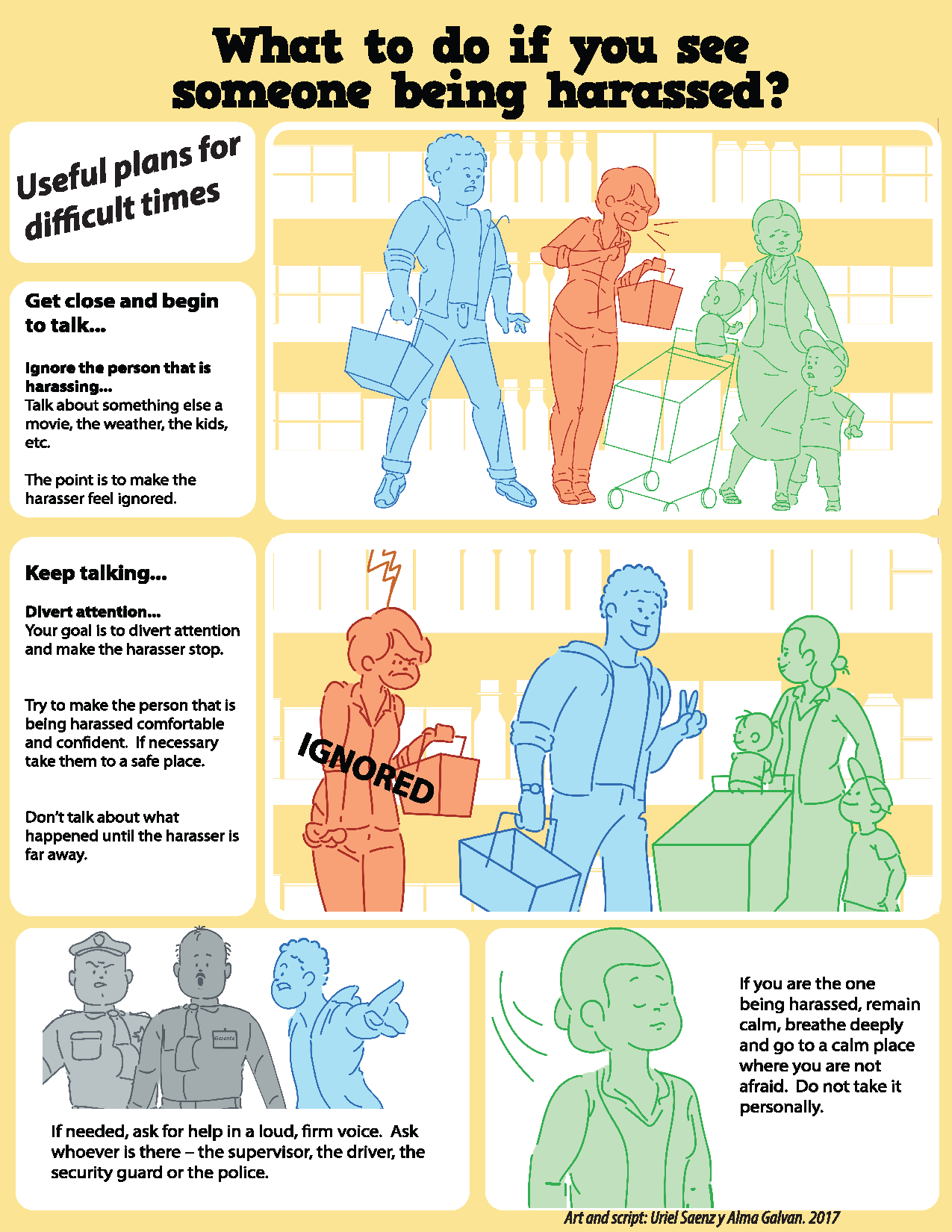
A guide to know how to react when you see someone being harassed. Art and script by Uriel Saenz and Alma Galván.
copy deeplink Hesperian Health Guides: Pesticides are Poison
Hesperian Health Guides: Pesticides are PoisonChapter 14: Pesticides Are Poison from the Hesperian.org health guide: A Community Guide to Environmental Health.
copy deeplink WPS Medical Evaluation Resources for Clinicians
WPS Medical Evaluation Resources for CliniciansIncludes EPA manual "How to Comply With the 2015 Revised Worker Protection Standard For Agricultural Pesticides - What Owners and Employers Need To Know" and an excerpt specifically for clininicians regarding medical evaluation and respirator fit test. See also the medical evaluation questions in English and Spanish.